Notable Royal Tombs around Hue
This is not only a historical relic but also a symbol of Hue, becoming one of the most attractive tourist destinations in the ancient capital.
Gia Long Tomb (or Thien Tho Tomb) was constructed from 1814 to 1820. This is the resting place of King Gia Long (1762 - 1820), the first king among the 13 kings of the Nguyen Dynasty. Gia Long Tomb was built in traditional architectural style and is divided into three main areas: the tomb area, the temple area, and the Minh Thanh Palace. It is famous for its unique feng shui architecture, considered the most distinctive in Vietnam.
Address: Thien Tho Mountain, Huong Tho Commune, Huong Tra District
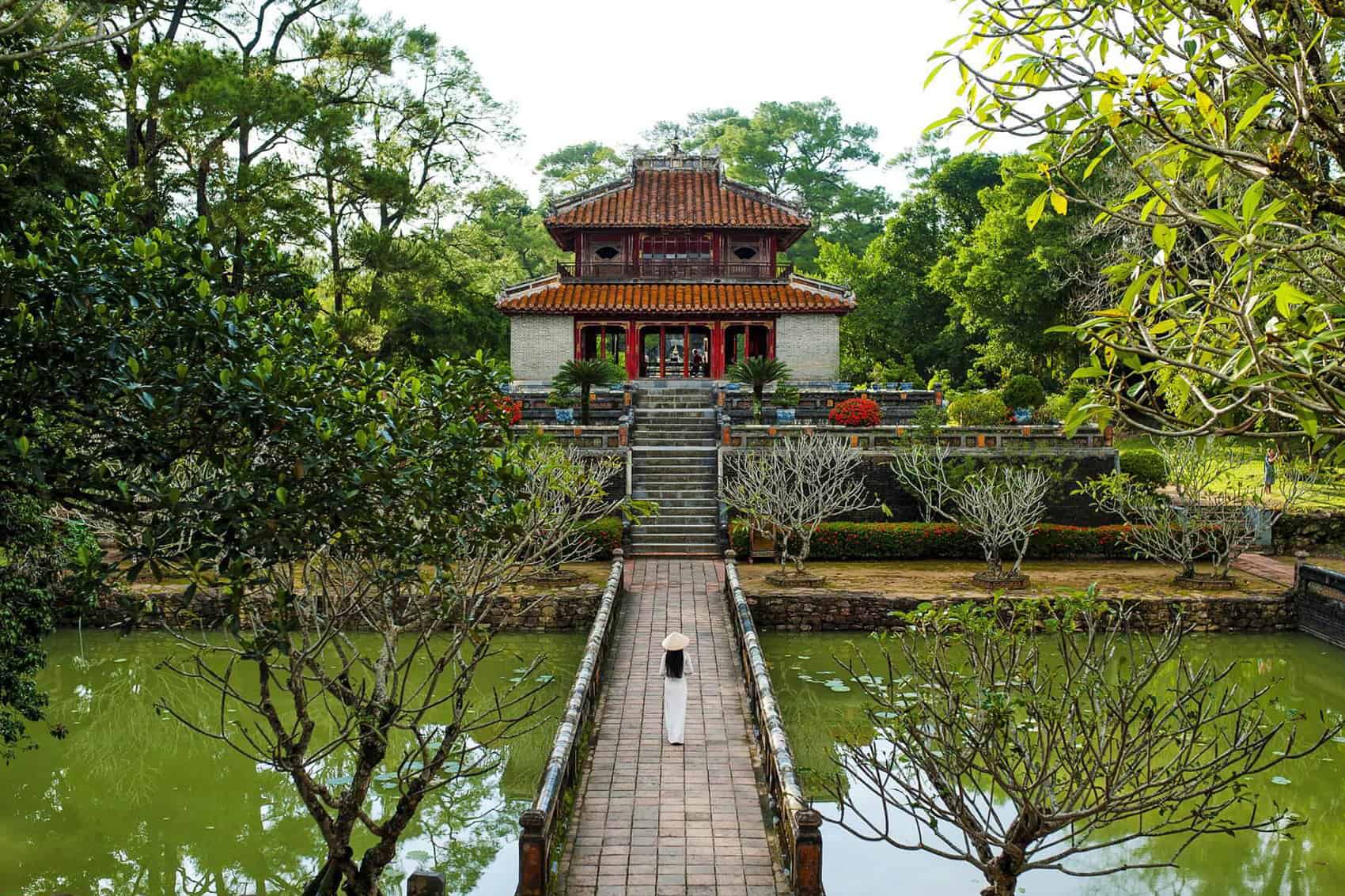
Minh Mang Tomb (or Hieu Tomb), also known as the Hieu Tomb, is the burial place of the king who made significant contributions to the country's development at that time. King Minh Mang spent 14 years searching for the best feng shui to build his tomb. Minh Mang Tomb features a majestic and solemn architectural layout, including the Dai Hong Mon (main gate), the courtyard, the worshiping area, Minh Lau Pavilion, and Buu Thanh (surrounding the tomb area). Particularly notable are nearly 60 engraved panels of selected poems, likened to a museum of poetry from Vietnam's early 19th-century literary era.
Address: Huong Tho Commune, Huong Tra District, Thua Thien Hue Province
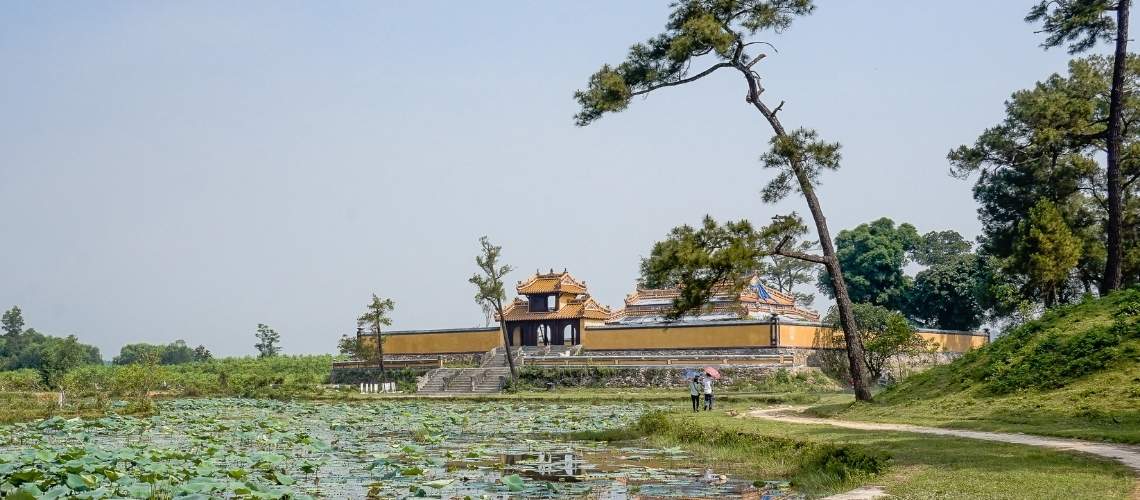
Thieu Tri Tomb (or Xuong Lang) was built in an exceptionally short period, completed in just 10 months in 1948. Facing northwest, it is the most uniquely oriented tomb among the Hue royal tombs. Combining elements from the architectural styles of Gia Long's and Minh Mang's tombs, the structure of Thieu Tri Tomb consists of two main areas: the tomb and the surrounding precinct. Surrounding the tomb is the serene countryside scenery of lush greenery and verdant rice fields.
Address: Cu Chanh Village, Thuy Bang Commune, Huong Thuy District.
Tu Duc Tomb was constructed over 3 years (1864-1867). Originally named "Van Nien Co," symbolizing eternity, its construction led to peasant exploitation, sparking popular uprisings. To cleanse these negative memories, it was renamed Thanh Khiem Cung ("Palace of Modesty") upon completion. After the king's passing, it became known as Khiem Lang. Every feature within the tomb complex carries the meaning of humility and respect.
Address: Thuong 3 Hamlet, Thuy Xuan Ward, Hue City.
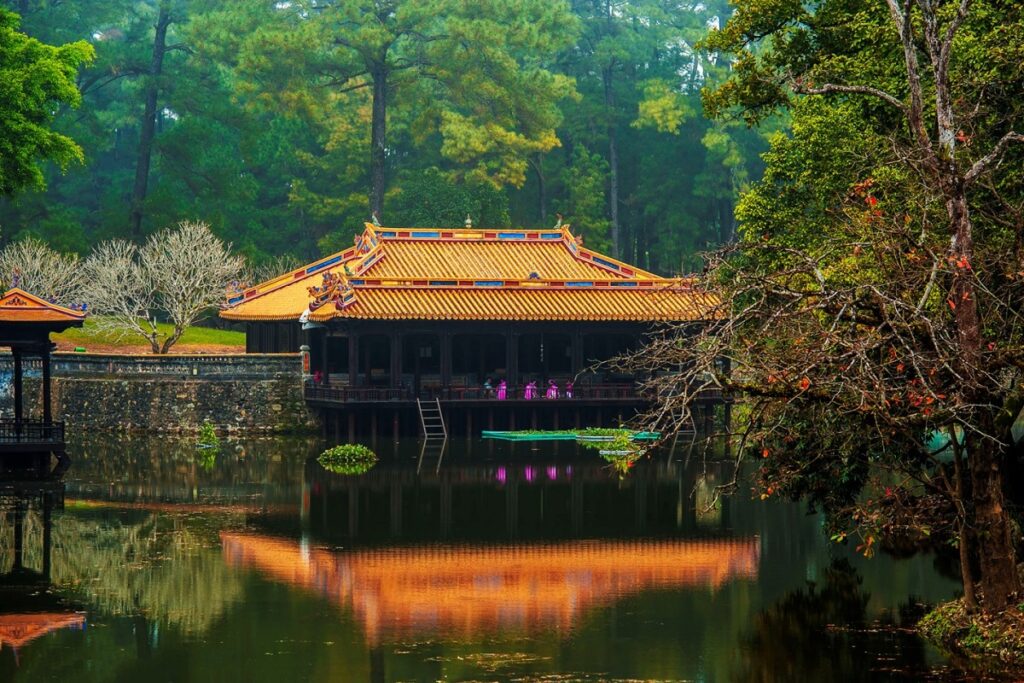
Duc Duc Tomb (or An Lang) was built in 1889 and serves as the final resting place for Kings Duc Duc, Thanh Thai, and Duy Tan. Unlike other royal tombs, it exhibits simple and modest architecture. Situated against Phuoc Qua Hill as the foreground, Tam Thai Mountain at its back, and a meandering stream in the front, the tomb exemplifies artistic value within the Nguyen dynasty's architectural landscape.
Address: An Cuu Ward, Hue City.
Dong Khanh Tomb (or Tu Lang), the tomb of the 9th Nguyen dynasty king, is located in Cu Si Village, now Thuong Hai Hamlet, Thuy Xuan Commune, Hue City. Spanning across four reigns (1888-1923), from Dong Khanh through Thanh Thai, Duy Tan, to Khai Dinh, the tomb reflects various architectural influences. It is divided into two sections: the precinct and the tomb. The precinct's ceremonial hall gleams with gilded trimmings.
Address: Thuong Hai Hamlet, Xuan Thuy Ward, Hue City.
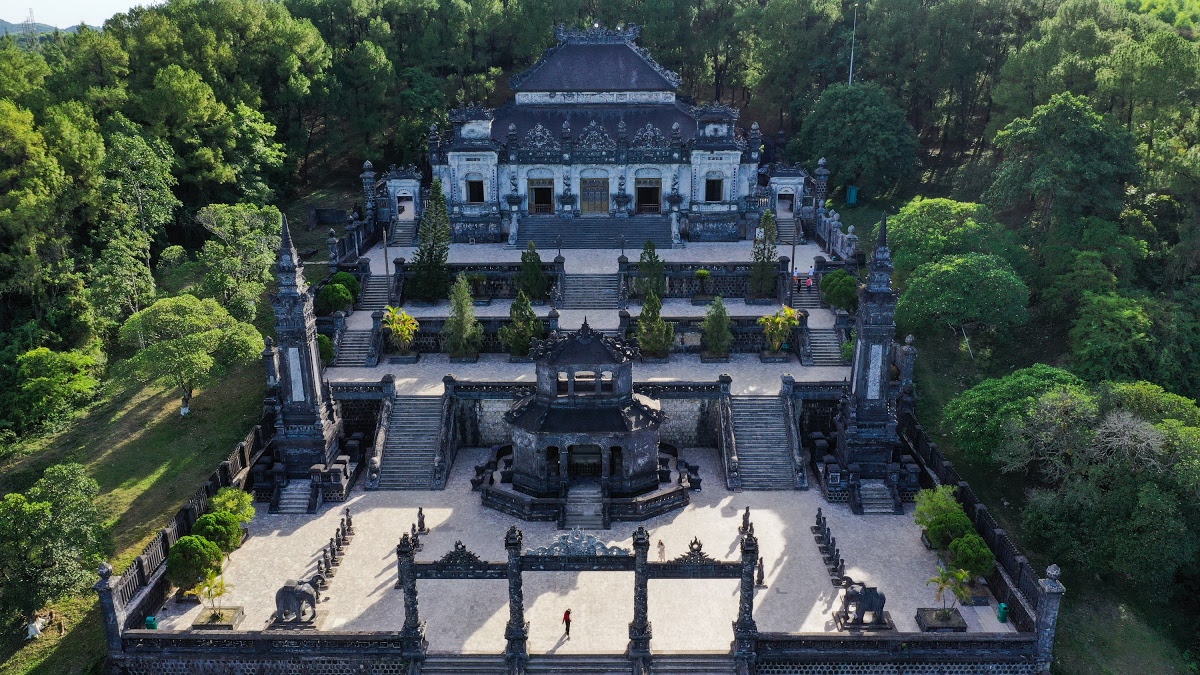
Khai Dinh Tomb - Ung Lang - King Khai Dinh reigned for less than ten years, but the construction of his tomb took 11 years (1920-1931). The Khai Dinh Tomb is a blend of Eastern and Western architecture, inspired by Hinduism, Buddhism, Roman, and Gothic styles. This diverse architectural influence is evident in its unique structures. Notably, the tomb features exquisite ceramic and glass mosaic murals. Inside the tomb, there are two life-sized bronze statues of the king. One is a gilded statue seated on a throne, crafted in Paris, and the other is a standing statue cast in Hue.
Address: Thuy Bang Commune, Huong Thuy Town, Hue City.
Synthetic
Photo: Collected from the Internet
Continue Exploring